
Appearance
数据模型
提示
本章节只针对开发者和测试人员阅读,普通用户可以跳过此章节。
KanTime 的核心数据模型围绕用户、项目和工时单构建。以下是主要数据实体及其关系的概述。
实体关系图 (ERD)
使用 Mermaid 语法绘制的实体关系图如下所示:
mermaid
erDiagram
    USER {
        int id PK
        string username
        string email
        string nickname
        string hashed_password
        string status
    }

    PROJECT {
        int id PK
        string name
        string description
        date start_date
        date end_date
        string status
        string budget_value
        string cost_value
        bool timesheet_approval_required
    }

    TIMESHEET {
        int id PK
        int project_id FK
        int user_id FK
        decimal hours
        date work_date
        string status
        datetime submitted_at
        datetime approved_at
        int approver_id FK
    }

    TIMESHEET_AUDIT_LOG {
        int id PK
        int timesheet_id FK
        int changed_by_id FK
        datetime created_at
        string reason_for_change
    }

    ROLE {
        int id PK
        string name
        string scope
    }

    USER_ROLE_ASSIGNMENT {
        int user_id FK
        int role_id FK
        int scope_id "Nullable, for project scope"
    }

    CLIENT {
        int id PK
        string company_name
        string contact_person
        string email
    }

    PROJECT_CLIENT_ASSOCIATIONS {
        int project_id FK
        int client_id FK
    }

    COST_RECORD {
        int id PK
        int project_id FK
        int type_id FK
        string amount
        date incurred_date
    }

    COST_RECORD_TYPE {
        int id PK
        string name
    }

    SALARY_HISTORY {
        int id PK
        int user_id FK
        string monthly_salary
        date effective_date
    }

    USER ||--o{ USER_ROLE_ASSIGNMENT : "has"
    ROLE ||--o{ USER_ROLE_ASSIGNMENT : "is assigned in"
    PROJECT ||--o{ TIMESHEET : "contains"
    USER ||--o{ TIMESHEET : "records"
    PROJECT ||--o{ PROJECT_CLIENT_ASSOCIATIONS : "is associated with"
    CLIENT ||--o{ PROJECT_CLIENT_ASSOCIATIONS : "is associated with"
    USER ||--o{ SALARY_HISTORY : "has"
    PROJECT ||--o{ COST_RECORD : "has"
    COST_RECORD_TYPE ||--o{ COST_RECORD : "is of type"
    TIMESHEET ||--o{ TIMESHEET_AUDIT_LOG : "has"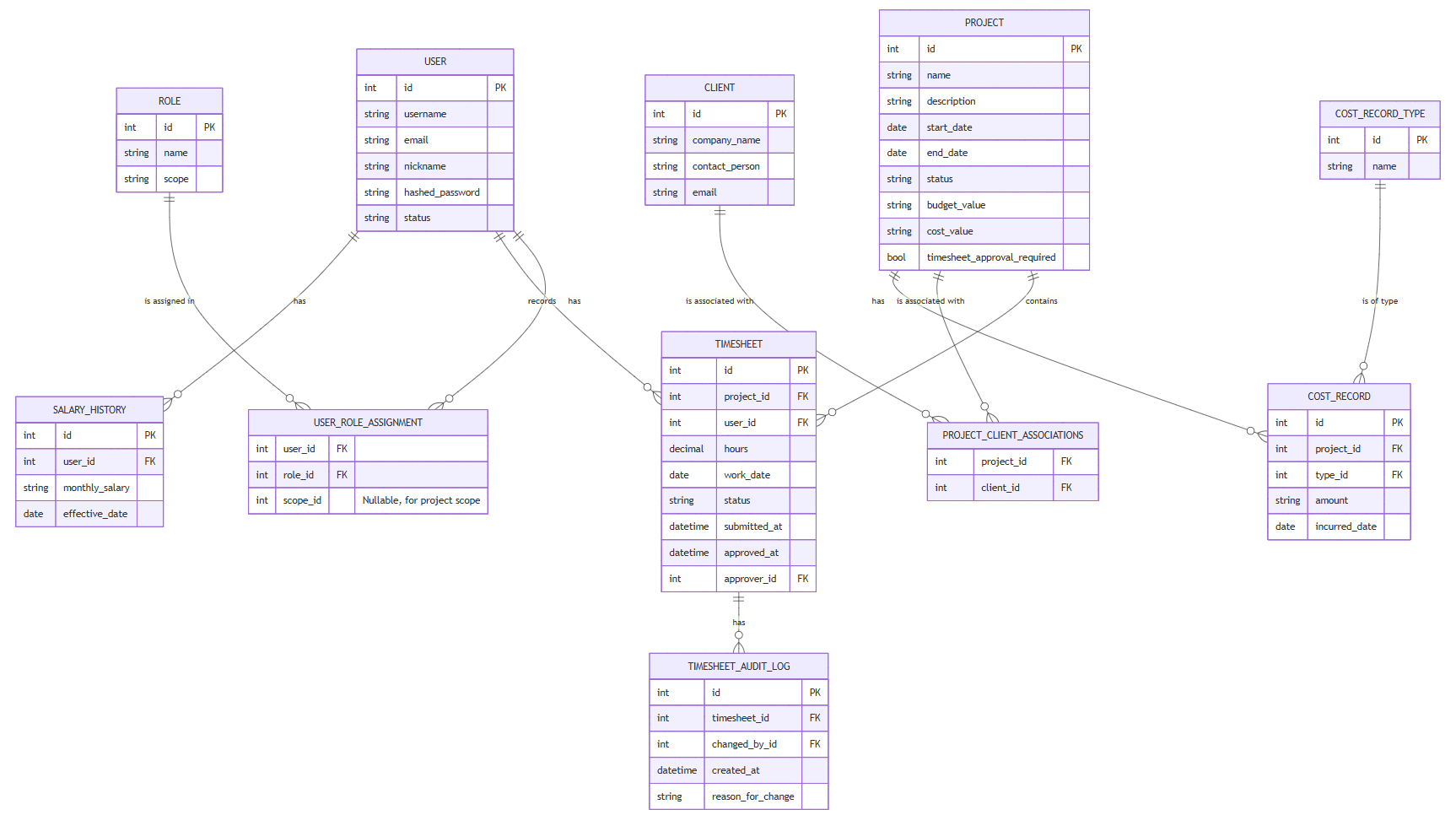
核心模型说明
User (用户)
- 系统的基本操作单位。
- 通过
USER_ROLE_ASSIGNMENT表与ROLE建立多对多关系。
Role (角色)
- 定义了一组权限。
scope字段是关键,它定义了角色的作用范围:global: 全局角色,如global_admin。project: 项目角色,如project_manager。
UserRoleAssignment (用户角色分配)
- 这是一个关联表,用于将用户和角色连接起来。
scope_id字段用于指定项目角色的作用域。例如,当一个用户被分配了project_manager角色时,scope_id将会是对应项目的id。对于全局角色,scope_id为NULL。
Project (项目)
- 核心业务对象,所有工时和成本都归属于某个项目。
- 通过
project_client_associations表与CLIENT建立多对多关系。 timesheet_approval_required: 布尔值,用于控制该项目下的工时单是否需要审批。budget_value: 项目预算金额。cost_value: 项目总成本的计算值。
Timesheet (工时单)
- 记录了某个用户在某个项目上于特定日期花费的工作时长。
- 包含一个
status字段,用于驱动审批工作流。其值包括:draft: 草稿pending: 待审批approved: 已批准rejected: 已拒绝pending_change: 待变更submitted_at,approved_at,approver_id是与审批流相关的字段,记录提交和批准的时间及人员。
TimesheetAuditLog (工时单审计日志)
- 记录了每一张工时单状态变更的详细历史,包括操作人、操作时间、变更前后的值以及原因,确保了审批流程的可追溯性。
Client (客户)
- 代表项目的客户,可以与多个项目关联。
SalaryHistory (薪酬历史)
- 记录了用户的历史薪酬和生效日期。此数据用于在计算项目人力成本时,根据工时单的日期动态获取当时的人力单价。
monthly_salary字段在数据库中是加密存储的。
CostRecord (成本记录)
- 记录与项目相关的直接成本,例如差旅、物料采购等。
- 关联到
Project和CostRecordType。
CostRecordType (成本记录类型)
- 成本记录的分类,例如“差旅费”、“物料费”等。